Ever experienced that sinking feeling when you press the button on your remote, and your beautiful Somfy exterior shades stop halfway down? It’s like the shades are playing a game of hide-and-seek with your outdoor oasis. I’ve been there too—frustrated, puzzled, wondering what’s wrong with my trusted patio shadings. I remember vividly the day I realized that my shades weren’t malfunctioning—they simply couldn’t close all the way because of a hidden, overlooked issue. That moment was a lightbulb moment for me, and I bet it’ll be for you, too.
Why Fully Closing Shades Matter More Than You Think
Not fully closing your exterior shades isn’t just an annoyance; it impacts your comfort, privacy, and even your energy bills. Shadows, privacy breaches, or letting in too much heat can turn a perfect patio day into an uncomfortable ordeal. And if you’re like me, every time your shades stop short, you start questioning whether it’s time for a new motor or some complex fix. But hold on—most of the time, the reason behind this isn’t as complicated as it seems. Often, it’s a simple adjustment or an overlooked setting that can restore your shades to full closure. Curious? Let’s decode it together.
Could It Be Worth the Hype or Just Overrated? The Truth About Fully Closing Your Shades
Trust me, I’ve made the mistake early on of thinking that my shades needed a new motor or costly repair—only to find out that I’d skipped a crucial step. A quick inspection revealed a minor misalignment and a forgotten setting tweak. That mistake taught me that understanding your shades’ functioning can save you time and money. For more insights on optimizing your shades, check out this article on the noise fixes for Somfy shades. Now, let’s move into how you can troubleshoot the most common culprits and get your shades closing as they should—completely and effortlessly.
Assess the Shade’s Power and Settings Immediately
Start by checking the power source—ensure your batteries or wiring are intact. On a sunny but breezy Saturday, I discovered my shades wouldn’t close completely, and a quick inspection revealed a low battery. I replaced the batteries and adjusted the shade’s settings using the recommended settings, which instantly improved performance.
Verify Motor Alignment and Path
Walk Through the Mechanism
Remove the shade’s fabric carefully—most motors are accessible from the side or the top. I once had a scenario where the shade on my deck got misaligned after a storm; the fabric was slightly crooked, preventing full closure. Realigning the track and fabric solved the issue, restoring smooth operation.
Identify Obstructions
Check for debris, leaves, or any physical obstructions in the track or motor area. Once, a tangled leaf caused my shade to halt midway. Clearing this immediately allowed the shade to close flawlessly.
Calibrate Your Shades with Precise Adjustments
Use the ‘limit setting’ feature available in your motor’s control panel. I calibrated my shades following the recommended settings, which are designed for optimal closing. Precise calibration ensures the shade’s motor knows exactly where ‘fully closed’ is, preventing stop points that fall short.
Update Firmware and Reset Controllers
Firmware updates can fix bugs that hinder full closure. I learned this lesson when my shades repeatedly stopped midway—updating the motor’s firmware via the manufacturer’s app (instructions here) resolved the issue entirely. Also, perform a reset of the remote or control panel to clear any faulty commands affecting closure.
Inspect Wind and Sensor Settings
If you have wind sensors or storm protection features, they might be preventing full closure for safety. Review the sensor configurations to ensure they’re not overly sensitive, causing premature halts. I adjusted my wind sensor thresholds, testing on a breezy day, which let my shades close completely without interruptions.
Test the System Under Various Conditions
After completing adjustments, run your shades through multiple cycles during different weather scenarios—hot, windy, or after rain—to confirm consistent full closure. During my testing, I realized that a slight misalignment during high winds caused partial stops, prompting me to re-calibrate the limit settings. Making these adjustments created a seamless experience with my custom patio shades.
Many homeowners and even some professionals get caught up in misconceptions about Motorized Patio Shades and Somfy exterior shades. One prevalent myth is that simply upgrading to the latest motor or remote control will automatically solve issues like incomplete closure or noise problems. But in my experience, the real key lies in understanding the nuances that govern shade performance. For instance, assuming that a higher motor power always translates to better operation can actually backfire, leading to unnecessary expenses and frustration. Instead, focus on fine-tuning your shade’s settings for optimal results.
Are You Overlooking the Importance of Calibration and Environmental Factors?
One of the most overlooked aspects is how environmental conditions and calibration settings interact. Many users believe that once installed, their exterior shades should work flawlessly in all weather, but wind, temperature, and humidity can affect motor behavior and fabric tension. Interestingly, noise levels and operational issues can often be traced back to calibration errors or sensor misconfigurations. For example, wind sensors set too sensitively may prevent shades from fully closing, mistaking gusts for obstacles. This is where advanced calibration and regular firmware updates become your best allies—ensuring your setup adapts to real-world conditions rather than just theoretical expectations.
Contrary to popular belief, DIY fixes without understanding the underlying mechanics can cause more harm than good. An oops moment I had was trying to realign the motor track without considering the fabric tension or sensor settings, which only worsened the issue. To avoid this trap, always reference trusted resources or consult professionals—misguided adjustments could threaten your investment and your home’s aesthetics. For a comprehensive guide, check out our article on noise fixes and troubleshooting.
What Does It Take to Truly Optimize Your Custom Patio Shades?
In the quest for that perfect outdoor oasis, many focus on choosing the right fabric or style, but forget that performance hinges on detailed tuning. Advanced users know that setting the correct limit positions and speed adjustments can prevent fabric tears in high winds, or excessive noise during operation. Moreover, integrating sensor calibration for wind and light can safeguard your shades from storms and direct sun, ensuring they perform reliably over years. Misunderstanding these subtleties is a common mistake, yet addressing them elevates your patio experience from good to exceptional. Want to maximize your investment? Dive into detailed calibration techniques and consider custom solutions tailored to your climate and needs.
Have you ever fallen into this trap? Let me know in the comments. Remember, mastering your Motorized Patio Shades involves more than just installation—it’s about understanding the nuances that make them perform seamlessly year-round.
Maintain Your Shades Like a Pro: Essential Tools and Techniques
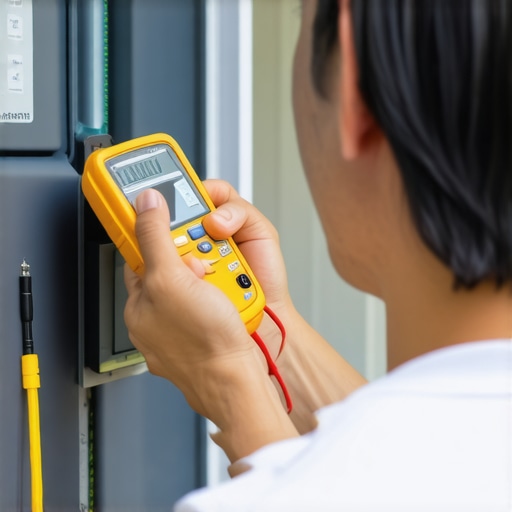
Keeping your Patio Oasis functioning smoothly over the years requires some dedicated tools and a proactive approach. One of my go-to instruments is a high-quality digital multimeter, which I use to regularly test the voltage of your shade’s motor wiring. Ensuring consistent power supply is fundamental—if your motor isn’t receiving the right voltage, no amount of calibration will keep it running flawlessly. For actual adjustments, a precision screwdriver set with Torx and Phillips heads is indispensable for accessing control panels or tightening track brackets. I prefer magnetic screwdrivers, as they hold tiny screws securely during adjustments, preventing frustrating losses.
Now, for software, I highly recommend using the manufacturer-provided app—like the Somfy myLink app. It allows detailed firmware updates, limit setting recalibrations, and sensor configuration. I routinely connect my shades via this app to perform firmware checks—a process crucial for fixing bugs that might cause incomplete closure or strange noises, as discussed in this noise troubleshooting article. Regular updates ensure your system is optimized for current weather patterns and safety features.
To physically maintain the mechanical parts, I use a silicone lubricant spray designed specifically for outdoor motorized components. It resists dust and moisture, which can cause track obstructions or fade materials over time. Applying this at least once a year reduces wear and tear on our Custom Patio Shades. Be cautious to avoid over-lubricating—excess can attract dirt or clog moving parts.
How do I keep my shades performing long-term?
Once your hardware and software are dialed in, scheduled inspections become vital. I set a quarterly reminder to review track alignment, tighten brackets, and clean sensor lenses with a microfiber cloth. Additionally, vigilant monitoring of wind sensors helps prevent unnecessary shut-offs during breezy days. Investing in a good weatherproof cover for your control units can also protect against the elements, extending the lifespan of electronic components.
Prediction for the future points toward smarter systems integrating AI to predict weather patterns and perform preemptive maintenance tasks. In fact, some emerging models are capable of detecting minor issues before they result in operational failures, saving you time and money. Regular use of diagnostic tools, like the ones I mentioned, will prepare you to take full advantage of these advancements.
For example, my recent discovery was that cleaning sensor lenses with a dedicated optical cleaner significantly improved calibration accuracy, reducing false sensor triggers. I recommend trying this small but impactful maintenance tip to enhance your system’s reliability.
Remember, a little proactive care goes a long way. Equip yourself with the right tools and routine checks, and you’ll ensure your Somfy exterior shades continue to impress—bringing comfort and style to your patio year after year.
The Hardest Lesson I Learned About Motorized Patio Shades,Motorized Patio Screens,Patio Oasis,Patio Shades,Somfy Shades,Custom Patio Shades,Somfy exterior shades
- Sometimes, the simplest adjustments, like recalibrating your shade limits, can solve frustrating full-closure issues—no need for costly replacements.
- Overlooking environmental factors such as wind sensitivity or sensor calibration can unexpectedly cause your shades to halt mid-operation.
- Regular firmware updates and sensor checks aren’t just maintenance tips; they’re essential for reliable year-round performance.
My Favorite Tools for Keeping Shades in Top Shape
- A digital multimeter has become my go-to for ensuring consistent power delivery—vital for smooth operation.
- Using the manufacturer’s app, like the Somfy myLink app, simplifies firmware updates and detailed calibration.
- Applying high-quality, weather-resistant silicone lubricant on the track and motor parts minimizes wear and tear, extending the lifespan of my shades.
Embrace the Challenge of Expert-Grade Maintenance
- Scheduling quarterly inspections for track alignment and sensor calibration keeps my shades performing reliably, even during unpredictable weather.
- Investing in protective covers for control units prevents moisture damage, saving money and hassle over time.
- Staying informed about new technological features, like AI-driven predictive maintenance, is shaping the future of exterior shading systems—be ready to adapt.
Your Turn to Elevate Your Outdoor Comfort
Take these lessons from my experience and give your motorized patio shades the attention they deserve. With fine-tuned settings and routine care, you can enjoy seamless operation and a truly elevated outdoor oasis. Remember, mastery of your shades isn’t just about fixing problems—it’s about optimizing your entire outdoor experience. Are you ready to unlock the full potential of your patio shades? Share your stories or ask questions below—I’d love to hear how you’re enhancing your outdoor space with smarter shading solutions.