I was standing there with a cold drink in one hand and my Somfy remote in the other, ready to enjoy the ultimate patio oasis I’d spent months planning. I pressed ‘down,’ expecting that smooth, silent glide. Instead, I got a sickening thwack-scrunch sound. My high-end motorized patio screen had decided to accordion itself into the left track while the right side kept descending. It looked like a total mess. I honestly thought I’d just toasted a multi-thousand-dollar investment in five seconds of sheer negligence. It’s a gut-wrenching feeling when your motorized patio shades fail right when the sun starts to bite.
Stop Watching Your Motorized Screens Bunch Up Like a Bad Curtain
The truth is, most of us treat our custom patio shades like a ‘set it and forget it’ appliance. I was guilty of that, too. For the longest time, I assumed that if the motor was running, everything was fine. But then the bunching started. I made the classic rookie error of grabbing a can of greasy spray to slick it up, which is why you should never use WD-40 on your motorized patio screens—it actually attracts the very grit that causes the jam in the first place. When your motorized patio screens keep jamming in the tracks, it’s rarely a motor failure; it’s almost always a friction and alignment issue that can be solved before your coffee gets cold. Today, I’m going to show you the exact 5-minute track tweak I used to keep my Somfy exterior shades running flawlessly without calling out an expensive technician. Have you ever felt that panic when you see your screen start to tilt and fold?
Is This Quick Fix Just a Band-Aid?
You might be skeptical that five minutes of work can actually save a system as complex as Somfy shades. I get it. But according to the International Association of Certified Home Inspectors (InterNACHI), mechanical obstruction and debris in guide tracks account for the vast majority of failures in exterior rolling systems. By addressing the track tension and debris path now, you aren’t just fixing the bunching; you’re preventing the motor from burning out due to excessive torque. I learned the hard way that ignoring a slight hesitation in the screen leads to a full-blown tear at the edges. This fix is about more than aesthetics; it’s about protecting your investment. We aren’t just slapping a patch on it; we are recalibrating the way the fabric interacts with the side channels to ensure a lifetime of smooth operation.
Clear the Path Before You Touch the Remote
Most homeowners assume that when their motorized patio shades start to act up, it’s a computer glitch. In reality, your screen tracks are like a train rail; even a tiny pebble can cause a total derailment. I remember one humid Tuesday when my left screen would only go down halfway. I kept hitting the ‘down’ button on my Somfy remote, thinking it just needed a little digital encouragement. Big mistake. I heard the motor straining like an old truck climbing a steep hill. When I finally grabbed a ladder, I found a dried-up cicada shell wedged deep in the track. That tiny exoskeleton was about to cause a five-hundred-dollar repair bill. Before you mess with any settings, you have to ensure the physical path is pristine.
Scrub Away the Grit That Kills Your Motor
Start by fully retracting your screens. Take a soft-bristled brush—an old dish brush works wonders—and run it through the entire length of the side channels. You aren’t just looking for big debris like my cicada friend; you’re looking for the fine dust and spider webs that create ‘micro-friction.’ This friction is why your motorized patio screens keep jamming in the tracks over time. If you live in a dusty area, this should be a monthly ritual. Once the dry brushing is done, use a damp (not soaking) microfiber cloth to wipe the interior of the tracks. This is the foundation of fixing your stuck somfy exterior shades without needing a toolbox. 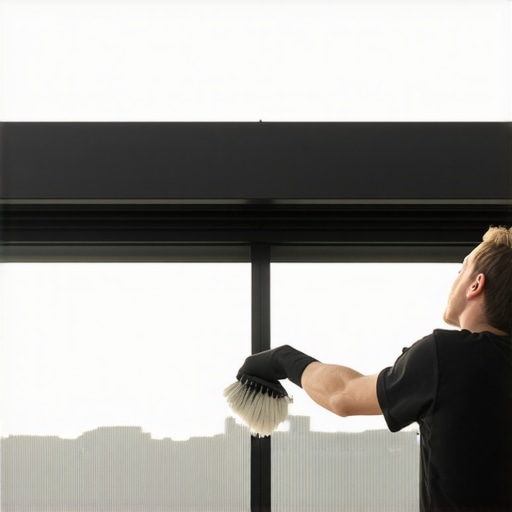
Use the Right Slick to Keep It Silent
Once the tracks are clean, you need to address the slide. This is where most people fail. I’ve seen neighbors use cooking oil, WD-40, and even hairspray to try and lube their tracks. Those are magnets for dirt. You need a dry silicone spray. This creates a teflon-like surface that stays slippery without being ‘wet’ or ‘tacky.’ Spray a small amount onto a cloth and wipe it inside the track. This is the $5 lubricant that stops motorized patio screens from squealing and ensures that Somfy shades glide rather than jump. If the fabric catches on a dry spot, it creates a momentary pause that the motor interprets as an obstacle, causing it to stop or reverse.
Level the Hem Bar to Stop the Tilt
If your screens are clean and lubed but still bunching on one side, your hem bar—the heavy weight at the bottom—might be out of level. If that bar is even a fraction of an inch off, the fabric will feed into the roller at an angle. Think of it like rolling up a sleeping bag; if you start crooked, you’ll have a huge bulge at one end by the time you’re done. You can usually stop your custom patio shades from sagging with this 5-minute tension fix by adjusting the set screws on the side of the weight bar. This ensures the fabric is pulled tight and even across the entire width of your patio oasis, preventing those ugly horizontal wrinkles that eventually lead to permanent fabric memory and tears.
Stop Picking Dark Colors Just to Beat the Heat
Most homeowners believe that the darker the fabric, the cooler their patio will be. It seems logical, right? We wear white in the summer to stay cool, so we assume dark shades act like a black hole for heat. In my experience, this is the biggest misconception in the world of custom patio shades. While dark colors are excellent for reducing glare, they actually absorb solar radiation and can radiate that heat back toward your seating area. If you want to actually drop the temperature, you need to realize that mesh density matters more than fabric color for your patio oasis. A high-quality light-colored mesh with a 5% openness factor can reflect significantly more energy than a black 10% mesh. According to the Department of Energy, exterior shading devices can reduce solar heat gain by up to 80% when properly selected, but the ‘trap’ is choosing a tight weave that kills your airflow. Without a breeze, you aren’t building a retreat; you’re building a convection oven. 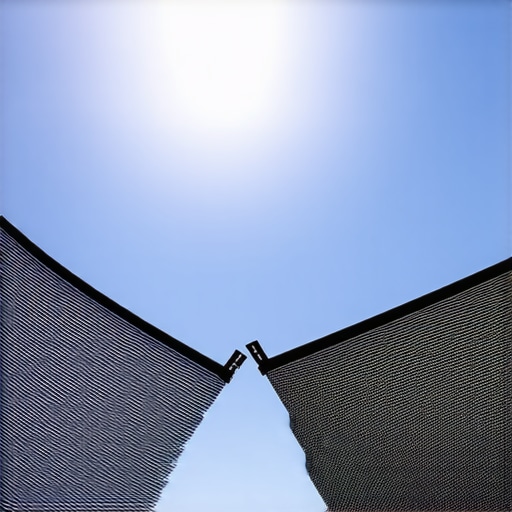
The Winter Mistake That Snaps Your Motor Shaft
Here is a nuance that most installers forget to mention until it’s too late: the ‘freeze-thaw’ cycle. I’ve seen more Somfy exterior shades destroyed in December than in any other month. If moisture gets into the tracks or the hem bar and freezes overnight, the fabric becomes physically locked to the side channels. When you hit that remote in the morning, the motor exerts massive torque to overcome the ‘obstacle.’ This is the frozen fabric mistake that destroys motorized patio shade motors. You might not hear a snap immediately, but you are micro-tearing the internal gears. If there is ice on your deck, leave the motorized patio shades alone. It is a simple rule that saves you a thousand-dollar replacement.
Why does the obstacle detection trip when nothing is there?
This is the most common ‘advanced’ frustration I hear about. You’ve cleaned the tracks, the weather is perfect, but your Somfy shades stop and reverse halfway down. Often, this isn’t a mechanical failure but a calibration issue with the sensitivity settings. If the wind is gusting just right, it creates enough back-pressure on the fabric that the motor ‘thinks’ it hit a chair or a person. This is why your somfy obstacle detection keeps tripping on nothing. You can actually adjust the ‘stop’ threshold via your remote to account for high-wind environments. This prevents the system from being overly sensitive while still protecting your kids or pets.
Avoid the Warranty Voiding Pressure Washer
When it comes to cleaning, I see people treating their motorized patio screens like a concrete driveway. Using a pressure washer is one of the 7 mistakes homeowners make with custom patio shades that will instantly void your warranty. High-pressure water can force its way into the sealed motor housing or de-laminate the heat-welded seams on the edges of the mesh. It’s an expensive ‘oops’ moment that is completely avoidable. Stick to a garden hose and a soft brush. Have you ever fallen into this trap or accidentally pushed your system too hard during a storm? Let me know in the comments below, I’d love to hear how you handled it.
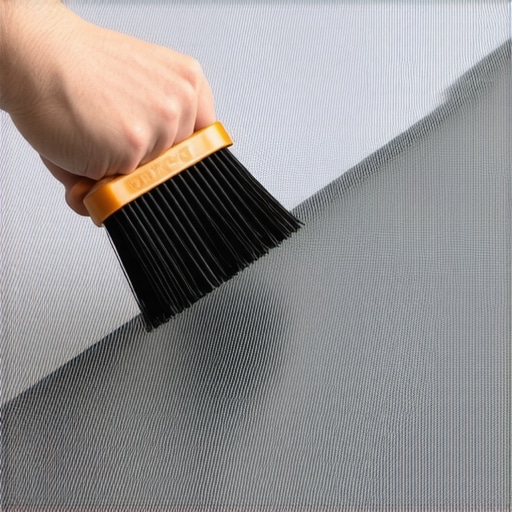
Beyond just keeping the tracks clean, I’ve found that the real secret to a long-lasting patio oasis lies in the small, technical details that most installers gloss over. For example, I keep a dedicated 1-inch natural bristle paintbrush in my outdoor drawer specifically for the upper housing. Dust likes to settle right where the fabric rolls up, and if that grit gets rolled into the layers, it acts like sandpaper on the mesh. This is exactly why your motorized patio screens keep tearing at the edges after only a few seasons. Taking sixty seconds to brush off that top ledge every few weeks has saved my screens from the ugly ‘burn marks’ that occur when dirt is pressed into the fabric under tension. It’s these tiny habits that make Somfy exterior shades a lifelong investment rather than a temporary luxury.
How do I keep these screens running like new for a decade?
Maintenance isn’t about deep-cleaning once a year; it’s about consistent, low-effort checks. According to the Somfy technical manual for the Maestria 50 RTS, the obstacle detection system relies on precise torque-sensing technology that measures resistance in Newtons per meter. If your tracks are even slightly sticky, the motor works harder, creating heat that eventually degrades the internal capacitors. This is why I swear by the ‘dry-run’ test once a month. I’ll stand by the tracks and watch the screen descend without any wind. If I see even a tiny stagger or hear a faint rhythmic clicking, I know it’s time for a quick wipe-down. Knowing how to clean your somfy exterior shades without damaging the fabric is the difference between a system that lasts five years and one that lasts fifteen.
Why Voice Control is More Than Just a Party Trick
I used to think that connecting my motorized patio shades to my smart home was just for showing off to guests. I was wrong. By using the Somfy TaHoma switch, I’ve set up ‘If-This-Then-That’ (IFTTT) routines that automatically retract the shades if the local weather station detects wind gusts over 20mph. This is far more reliable than waiting for a physical sensor to react after the wind has already hit. You can stop using remotes and voice control your patio shades in 2026 to ensure your investment is protected even when you aren’t home to press a button. Integrating your custom patio shades into a smart ecosystem is the ultimate way to scale your outdoor comfort without adding more chores to your weekend list.
The Future of Smart Patios and Climate Sensing
Looking ahead, I predict we are going to see motorized patio screens that don’t just react to the wind, but anticipate the sun’s angle using hyper-local AI forecasting. We are already seeing the beginning of this with how Somfy wind sensors save your patio shades from 2026 storms by triggering ‘safe modes’ before the first raindrop hits. The technology is moving toward a completely autonomous outdoor experience where the mesh adjusts its own tension based on humidity levels. My advice? Start with the basics today so you’re ready for the tech of tomorrow. Go grab a level and check that hem bar right now—it’s the most important five-minute fix you’ll do all month. Your motor will thank you for the reduced workload, and your wallet will thank you for the lower energy bills.
The Hardest Lesson I Learned About Keeping Custom Patio Shades Flawless
I used to think that as long as the motor hummed, the system was healthy. I was wrong. I realized that the silence of your screen is the best indicator of its health. When things start to get loud, it’s usually because you’ve fallen into one of the 7 mistakes homeowners make with custom patio shades, like over-lubricating or ignoring the hem bar alignment. Another lightbulb moment was realizing how much how Somfy wind sensors save your patio shades from 2026 storms—trusting the automation is often safer than trusting your own reaction time. Finally, I learned that the fabric mistake that makes custom patio shades impossible to clean is often just letting pollen sit too long in the weave. Don’t wait for a visible layer of grime; a quick rinse saves the motor from extra drag.
My Reliable Toolkit for a Smooth Running Screen
I don’t believe in over-complicating maintenance. First, I always keep a specific dry silicone spray handy because it’s the $5 lubricant that stops motorized patio screens from squealing without attracting dirt. Second, I recommend everyone bookmark the expert tips for choosing custom patio shades in 2025 to understand the weight limits of their specific mesh. Finally, I’ve moved away from manual control entirely; learning how to voice control your patio shades in 2026 has been a game-changer for protecting the screens when my hands are full or the weather turns suddenly. #IMAGE_PLACE_HOLDER#
Reclaim Your Ultimate Patio Oasis Today
Your outdoor space should be a sanctuary, not a source of stress. By taking these small steps to maintain your patio oasis, you’re ensuring that your motorized patio shades remain a luxury that works for you, rather than a project you have to work on. Don’t let a small track issue rob you of a sunset view. Go take a look at your tracks now and give them the five-minute refresh they deserve. Have you ever had a screen jam right before a big outdoor party or dinner? Let me know how you fixed it in the comments!